SHIBBOLETH
THESAURUS OF CHILD ECOLOGY
THESAURUS OF CHILD ECOLOGY
Couldn't load pickup availability
An ecology learning tool composed of cards that emerged from children’s involvement in designing the textbook.
This book shows what happens when children are involved in designing their own textbook. It is a reader for understanding ecology as a school subject, while also serving as a practical tool that demonstrates how an ecology of images can function as a method of collective learning.
At the heart of the book are 250 cards, colour-coded into three categories: Names, Things, and Uses. Names provide concise definitions of key concepts related to ecology, while Things contain synopses of texts written between 300 BCE and 2020, showing their relationship to those concepts. Uses presents exercises designed to practically connect and activate these concepts and texts. Together, these cards function like a living thesaurus, where meaning is not fixed but discovered through use, relationship, and context.
Students first engage with practical exercises (Uses), then learn about the texts that form their background (Things), and finally come to understand the complex concepts behind their actions and readings (Names). In the classroom, the cards can be linked together with sample holders to create collaborative installations or tapestries. Each configuration forms a unique ecology of ideas, allowing children to create their own environments of meaning without converging into a single narrative.
The form and structure of the book are based on feedback from 24 children who participated in workshops held in Castiglione delle Stiviere, Italy, from 2023 to 2025. Although it was initially designed by educators and followed the format of conventional textbooks found in traditional education systems, the children expressed specific requests regarding the form of their textbook. This led to a restructuring of the content, the adoption of a softcover format, the combination of images and text, a reduction in the amount of information per page, the introduction of colour, and the use of a serif typeface.
The book raises questions about the role of publishing in education. Who decides what knowledge is printed? Is it even necessary to print books today? Can children co-create their own learning tools? These questions are rooted in the practice of the workshops, where ideas were explored to see how they move, how images encourage dialogue, and how learning can be recorded as a living archive. Information is not confined to books but is reorganised and repurposed as exhibitions, games, theories, or shared gestures.
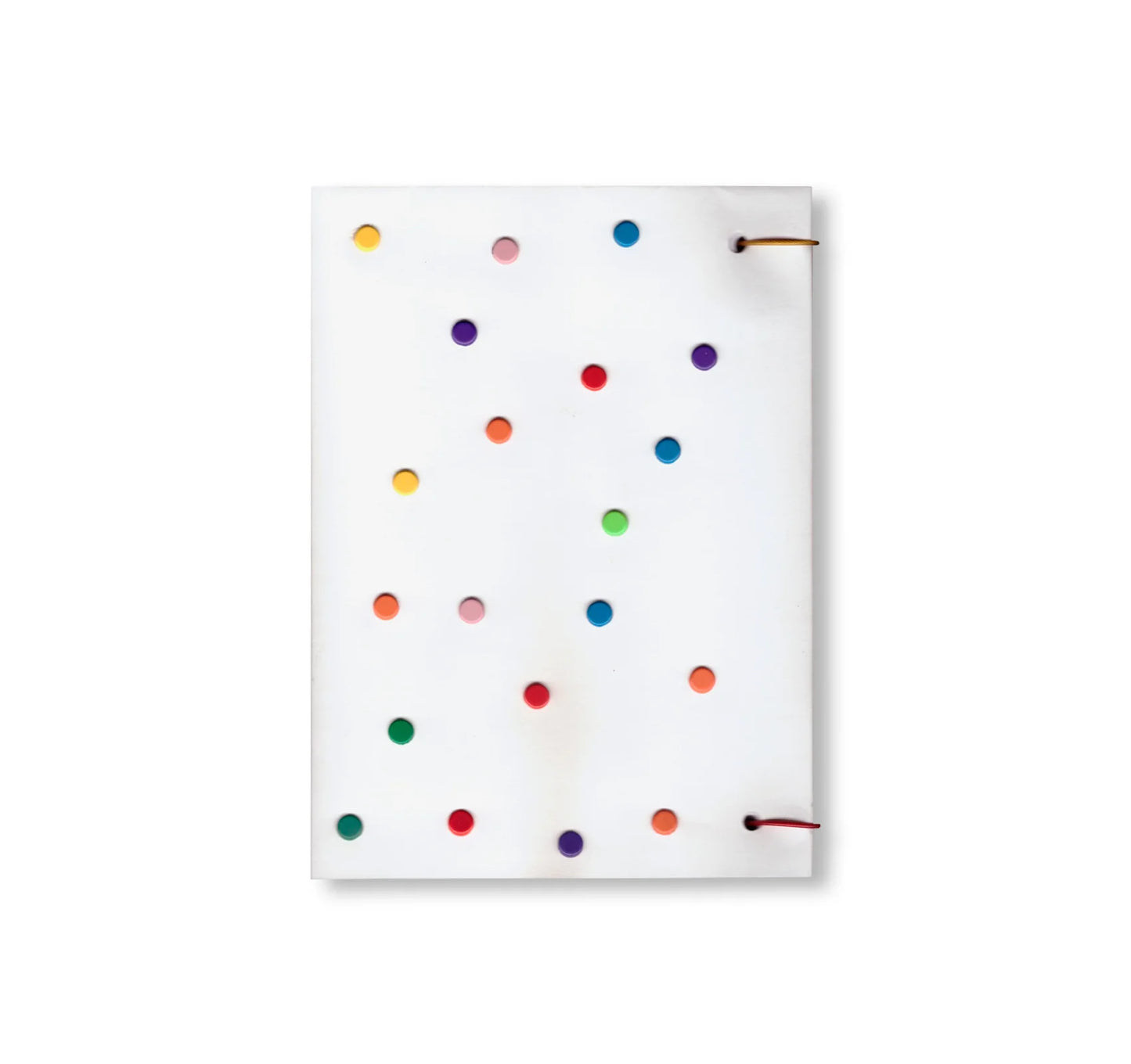
In addition to being read, the book can be displayed as a wall tapestry using the holders attached to the cover. Alongside this project, a small notebook featuring a bird (dodo) drawn by the children, DODO NOTEBOOKS, has also been produced.
This project is supported by Strategia Fotografia 2024, promoted by the Directorate-General for Contemporary Creativity of the Italian Ministry of Culture.
Thesaurus of Child Ecology shows what happens when children contribute to designing their own school books.
The volume is a reader of ecology as a school subject and a practical tool showing how the ecology of images works as a method for learning collectively. At the heart of the book are 250 cards, divided into three colour-coded categories: Names, Things, and Uses. Names offer concise definitions of key concepts in ecology. Things contain synopses of texts written between 300 BCE and 2020 that relate to those concepts. Uses present exercises designed to activate and connect names and things through practical engagement. Together, these cards function like the components of a living thesaurus—where meaning is discovered through use, relation, and context.
Students engage with practical exercises (Uses), then learn about the background to these same exercises (Things) and finally they grasp the complex concepts behind the actions and readings they have completed (Names). In the classroom, students can thread the cards together with sample holders to build collaborative installations and tapestries—each configuration representing a unique ecology of ideas. No single narrative governs the connections; rather, each child constructs their own semantic habitat, revealing how multiple interpretations can grow from a common set of elements.
With regards to form, the book’s appearance and structure are entirely based on the feedback provided by a class of 24 children who attended a workshop cycle held between 2023 and 2025 in Castiglione delle Stiviere, Italy. Initially designed by educators, the book reflected an adult view of what a school book should be, replicating what already happens in academia. The children expressed very specific desires as to how their school book should look like, which led to a change in the contents’ order, to house the material in a soft-cover, to include both images and texts, to reduce the amount of content per page, to use colour and adopt a serif typeface.
The book poses questions about the role of publishing in education. Who decides what knowledge is printed? Do books need to be printed at all these days? Can children co-author their learning tools? These are practical inquiries, grounded in workshops where students explored how ideas migrate, how images prompt discussion, and how learning can be documented as a living archive—how information can be reshuffled, recycled, and repurposed, not only as a book, but also as an exhibition, a game, a theory, or a shared gesture.
Other than read, the book can be mounted as a wall tapestry with the staple holders on the cover.
The project is supported by Strategia Fotografia 2024, promoted by the Directorate-General for Contemporary Creativity of the Italian Ministry of Culture.
ISBN: 9788894759174
softcover
250 pages
148 x 210 mm
color, black and white
limited edition of 800 copies
2025
published by SHIBBOLETH
シェアする